The hazard people underestimate
Desert heat in Moab: the thing that actually hurts people
Visitors picture falling off something. In practice the rescues here are about heat and water, they happen on the famous trails rather than the remote ones, and most of them involve people who were fit enough and simply started too late.
The short answer
Start at dawn from May through September. Carry two to three litres per person for a front country hike and four or more in the backcountry, which is the National Park Service figure. Turn round when half your water is gone, not when you feel like it. And stay off open rock between 10am and 5pm in high summer.
That is the whole thing. None of it is difficult and all of it gets ignored, which is why rangers responded to 23 heat related search and rescue incidents across Arches and Canyonlands in a single year and described many of them as preventable.
The numbers
Hotter than the forecast suggests
Average high temperatures in Moab, over the thirty year record. July averages 99 degrees and half of all July days reach 100 or more.
- Apr
- 72°low 42
- May
- 83°low 50
- Jun
- 93°low 58
- Jul
- 99°low 65
- Aug
- 96°low 63
- Sep
- 87°low 53
- Oct
- 73°low 41
The air temperature is only part of it. Three things make the desert feel considerably worse than the same number would somewhere humid, and all three catch people out.
- The rock radiates. Slickrock in direct sun runs far hotter than the air above it, and you are walking on it with heat coming at you from below as well as above. A shaded thermometer reading does not describe the surface you are standing on.
- Low humidity hides how much you are losing. Sweat evaporates before you notice it, so you feel dry rather than drenched and badly underestimate your fluid loss. People who would drink constantly in Florida forget to drink at all here.
- There is almost no shade. Not a little shade. Effectively none on the open trails. The National Park Service lists limited shade alongside intense sun, low humidity and elevation as the combination that turns a short walk into a rescue.
Counterintuitive
It happens on the famous trails
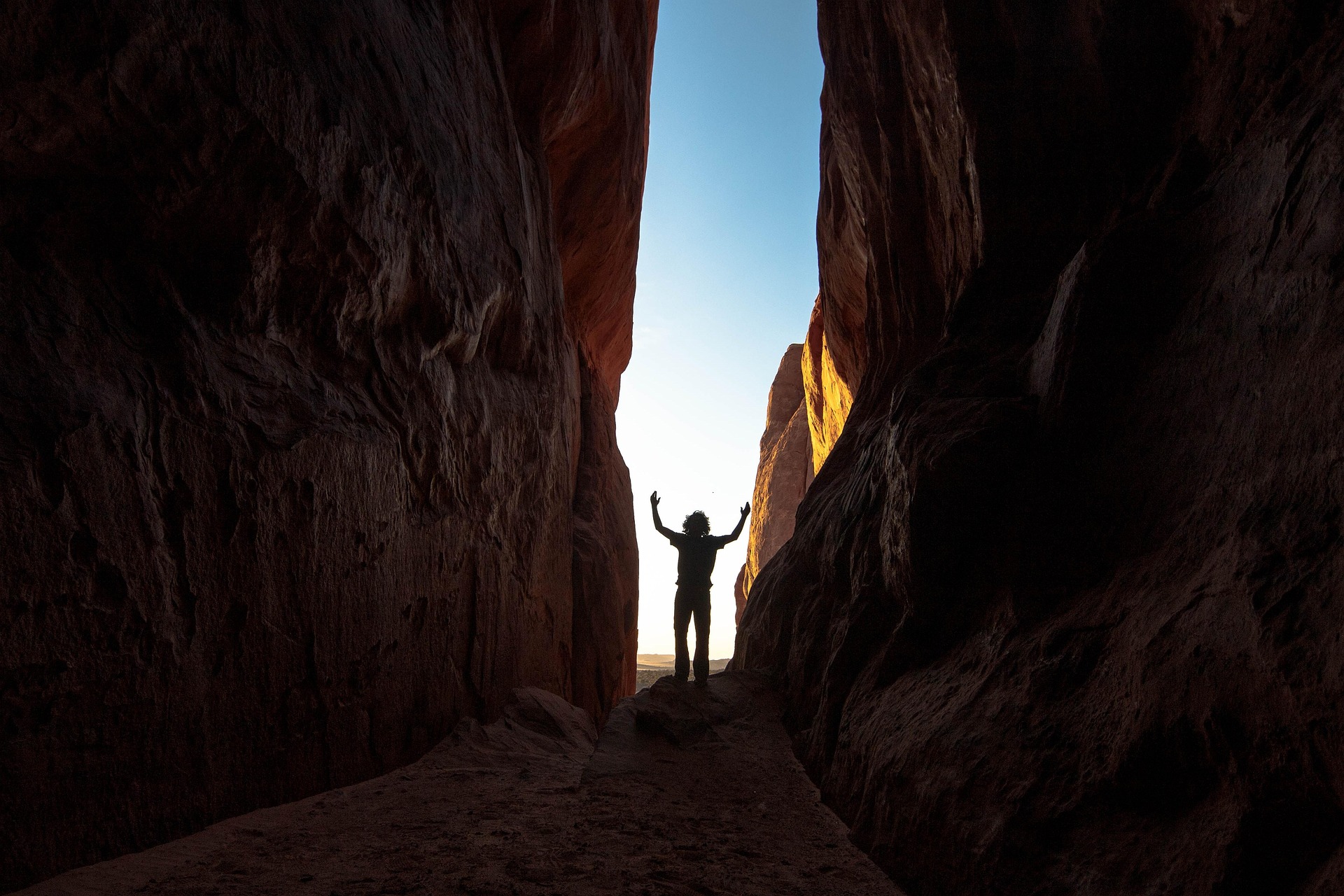
You would expect rescues to cluster in remote backcountry. They do not. An analysis of Moab area search and rescue data found that roughly 80 percent of rescues inside Arches happen on just three trails: Devils Garden, Delicate Arch, and the Devils Garden primitive loop. In Canyonlands about half occur on Upheaval Dome and the Syncline loop.
Those are the signposted, popular, everyone does them trails. Which tells you something useful: the problem is not difficulty, it is that a busy well marked trail feels safe enough that people set off without water at eleven in the morning.
Dehydration made nearly every incident type worse, regardless of what caused the call in the first place. And of 208 people rescued, only 16 were local. That is not a comment on visitors, it is a comment on acclimatisation. If you flew in yesterday from somewhere at sea level with humidity, your body has not adjusted and you should plan your first day accordingly.
The Delicate Arch trail deserves a specific mention. It is three miles return, climbs a long open slickrock slope with no shade whatsoever, and is the single most walked trail in the park. In July an afternoon attempt is hard work at best, and it is where a large share of the park's heat rescues happen.
The one that matters most
How much water, and when to turn round
- Front country hike
- 2 to 3 litresper person
- Backcountry
- 4 litres plusper person
- Turn round at
- Half gonenot empty
- Water on trail
- Noneassume this
Those are the National Park Service's own figures for Arches and Canyonlands, not a rule of thumb we invented. The halfway rule is the part worth committing to memory, and the park puts it plainly: when you are halfway through your water, you are halfway through your hike.
It sounds obvious written down. It is not obvious at the moment it applies, because that moment usually arrives when you are close to the thing you came to see and the arch is just over the next rise. A park spokesperson put it well: knowing when to turn round can be as important as reaching the destination.
The most common version of this failure is not having no water. It is having plenty of water sitting in the boot of a hire car at the trailhead, because the trail was only a mile and a half. Take it with you.
Two supporting points. Salty snacks matter more than people expect, because water alone does not replace what you sweat out and drinking large volumes without electrolytes has its own risks. And treat every water source you see in the backcountry as needing filtering, including the pretty ones.
Scheduling
The window you have to avoid
The National Park Service recommends avoiding strenuous activity between 10am and 5pm in the hot months. That is a seven hour hole in the middle of the day, and planning around it is the single biggest difference between a good summer trip and a miserable one.
Dawn to 10am
Do your hiking here
Arches is open twenty four hours and there is no longer any timed entry to work around, so nothing prevents a five thirty start. Cooler air, empty trailheads, better light, and you are finished before the heat arrives. This is what people who live here do, and it is not a sacrifice once you have done it once.
10am to 5pm
Do something else
Drive the scenic road with air conditioning, visit the museum in town, float the Colorado, eat a long lunch, or sleep. If you must be outside, be somewhere with water or shade rather than on open rock. This is not overcaution, it is how the season works here.
After 5pm
The second window
Temperatures drop through the evening and the light gets better all the way to sunset. A good time for a short trail. Carry a head torch, because the walk back takes longer than you think and desert dusk is quicker than people expect.
October to April
None of this applies
Outside the hot season you can walk whenever you like. October and April are close to perfect. Winter brings its own issue, which is ice on slickrock, but heat is not a consideration from roughly November through March.
Recognising trouble
Heat exhaustion or heat stroke
These are two different things and the difference matters enormously. One is unpleasant and manageable in the field. The other is a medical emergency that kills people if treatment is delayed.
Heat exhaustion
Serious, and manageable
- Headache, nausea, dizziness
- Weakness and irritability
- Heavy sweating and thirst
- Elevated body temperature
- Passing less urine than normal
What to do: get them into shade or air conditioning, remove excess clothing, cool the head, face and neck with cold compresses, and give frequent sips of cool water. If symptoms worsen, last beyond an hour, or they cannot keep fluids down, get medical help.
Heat stroke
Call 911 now
- Confusion or altered mental status
- Slurred speech
- Loss of consciousness
- Seizures
- Very high body temperature
- Hot dry skin or heavy sweating
What to do: call 911 immediately and start cooling. Move them into shade, remove outer clothing, and cool aggressively with cold water, wet cloths and ice at the neck, armpits and groin. Stay with them.
Confusion is the emergency sign
If someone becomes confused, disoriented, starts slurring words or behaves oddly in the heat, treat it as heat stroke and call for help. That change in mental state is what separates an emergency from a bad afternoon, and it is easy to explain away as tiredness in someone who has been walking for hours.
Ignore the widespread advice that heat stroke means someone has stopped sweating. The CDC lists hot dry skin or profuse sweating, so a person can be pouring with sweat and still be in serious trouble. Waiting for dry skin to confirm your suspicion wastes the time that matters.
Never give fluids by mouth to anyone who is unconscious or not fully alert. Cool them and get help.
General safety information, not medical advice. Signs and first aid summarised from the Centers for Disease Control and Prevention and the National Park Service. In an emergency in the parks or on surrounding public land, call 911. Mobile coverage is patchy to absent in the canyons, so tell somebody your plan before you set off.
Practical
What to walk in July
Summer does not mean staying indoors. It means choosing routes with water or shade instead of open slickrock, and going early regardless.
| Route | Shade | Water on route | In high summer |
|---|---|---|---|
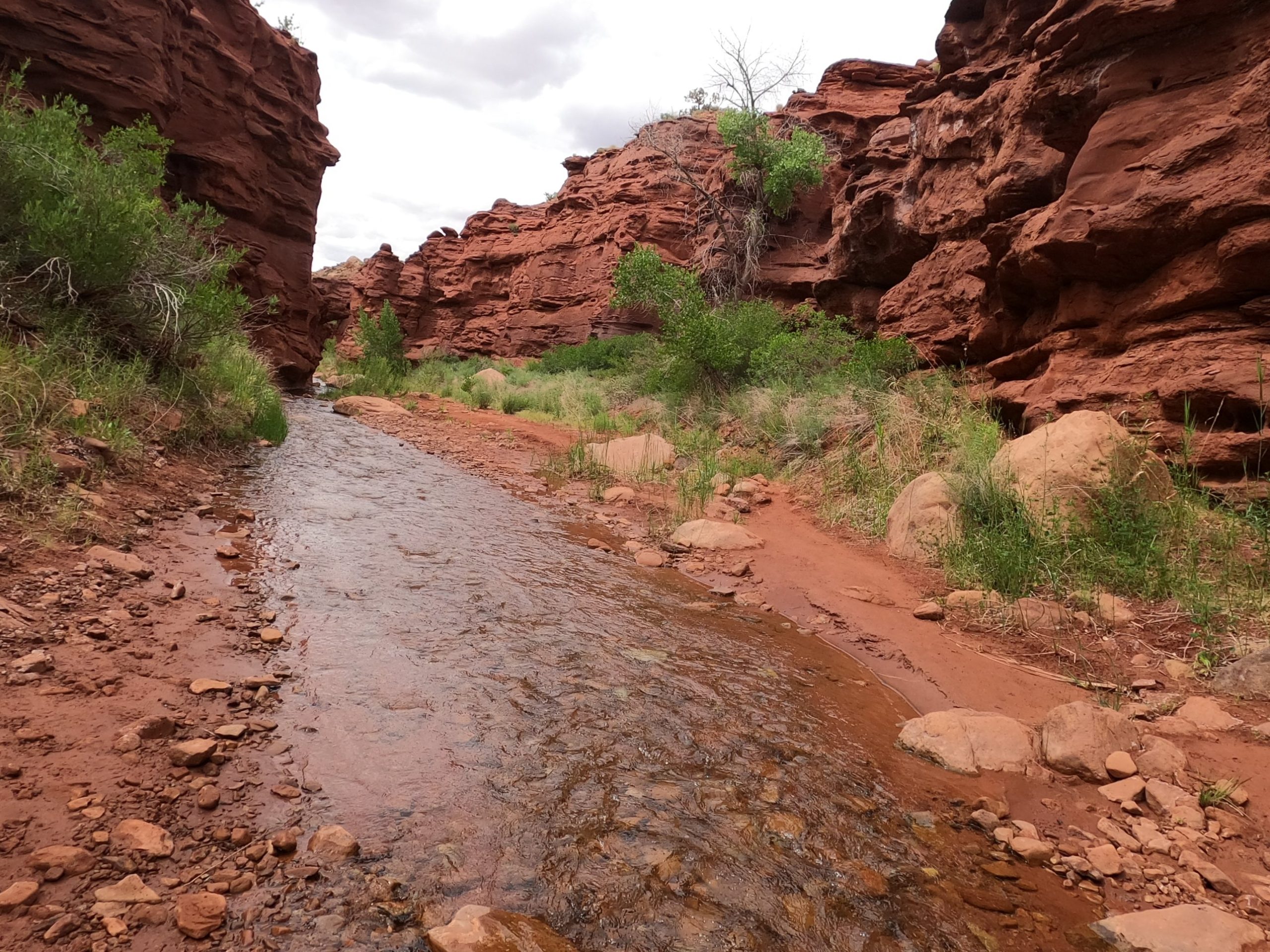
| Grandstaff Canyon | Good, canyon walls | Yes, stream | Best choice Five miles return, shaded much of the way |
| Professor Creek | Some | Yes, you wade it | Good Long but flat, and you are in water |
| Canyoneering, wet routes | Slot canyon | Yes, swimming | Good The approach walk is the exposed part |
| Sand Dune Arch | Good, between fins | None | Good Very short, genuinely shaded |
| The Windows | Minimal | None | Early only Short enough to manage before 9am |
| Delicate Arch | None | None | Dawn or not at all Open slickrock climb, the busiest rescue site in the park |
| Devils Garden primitive loop | Minimal | None | Avoid Long, exposed, and a rescue hotspot |
| Fiery Furnace | Some, between fins | None | Hard work The fins hold heat and there is little moving air |
Shade and water assessments are our own, based on walking these routes. Water in the canyons is seasonal and needs filtering. Nothing here replaces checking current conditions with the visitor centre.
Where this connects
Summer is when a guide earns the fee
Summer is the season a guide earns their fee most clearly, and not for the reason people assume. It is rarely about fitness or navigation. It is about judgement, and specifically about pacing and timing in conditions you have no reference point for.
A working guide knows which canyon still holds water in August, what time the shade leaves a particular wall, how fast your group is actually moving against the heat, and when to turn you round while you are still arguing that you feel fine. That last one is the whole job. Almost nobody turns themselves round at the right moment, because the right moment always feels early.
Common questions
Heat questions
How much water do I need for hiking in Moab?
The National Park Service recommends two to three litres per person for front country hikes in Arches and Canyonlands, and four litres or more per person for backcountry travel. Turn round when half your water is gone rather than when it runs out. Carry it with you rather than leaving it in the vehicle, which is the most common version of this mistake.
How hot does Moab get in summer?
July averages a high of 99 degrees Fahrenheit and roughly half of July days reach 100 or more. August averages 96 and June 93. Air temperature understates the problem, because slickrock in direct sun is considerably hotter than the air and there is almost no shade on the open trails.
What time should I hike in Moab in summer?
Start at dawn. The National Park Service recommends avoiding strenuous activity between 10am and 5pm during the hot months. Arches is open twenty four hours and no longer requires timed entry, so an early start costs you nothing but the alarm. Evening after 5pm is a reasonable second window if you carry a head torch.
What is the difference between heat exhaustion and heat stroke?
Heat exhaustion brings headache, nausea, dizziness, weakness, heavy sweating and thirst, and is managed by cooling the person and giving sips of water. Heat stroke involves confusion, altered mental status, slurred speech, possible loss of consciousness or seizures, and a very high body temperature. Heat stroke is a medical emergency: call 911 and cool the person aggressively. Confusion is the sign that separates the two. Note that heat stroke can present with either hot dry skin or heavy sweating, so do not wait for someone to stop sweating before acting.
Where do most rescues happen in Arches?
Analysis of Moab area search and rescue data found roughly 80 percent of rescues inside Arches occur on three trails: Devils Garden, Delicate Arch and the Devils Garden primitive loop. In Canyonlands about half happen on Upheaval Dome and the Syncline loop. These are the popular signposted trails rather than remote backcountry, which suggests the risk comes from underpreparing for an easy sounding walk.
Can I still hike in Moab in July and August?
Yes, with different choices. Hike at dawn, and pick routes with shade or water such as Grandstaff Canyon or Professor Creek rather than open slickrock like Delicate Arch. Wet canyoneering trips are a good summer option because most of the day is spent in shaded canyon and water. Save the exposed classics for a cooler month.
Next step
Plan around the heat
Temperature figures are thirty year averages. Water recommendations, timing guidance and rescue figures are from the National Park Service and local reporting on Arches and Canyonlands. Heat illness signs and first aid are summarised from the Centers for Disease Control and Prevention. This page is general safety information and not medical advice.